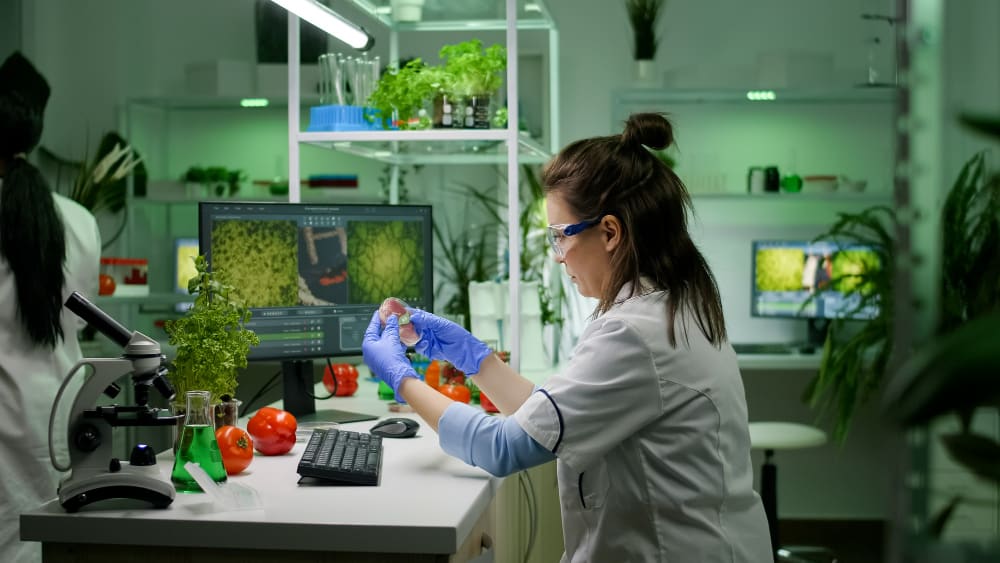
Future Harvest: Unpacking the Cultured Meat and Vertical Farm Revolution
How will we feed a growing global population sustainably? We explore two of the most exciting innovations in food technology: vertical farming and cellular agriculture.
The global food system stands at a crossroads. Faced with environmental urgency, increasing urban populations, and the need for ethical sourcing, traditional agriculture systems are proving vulnerable to shocks and stresses. However, innovation is paving the way for a revolutionary approach to feeding humanity, centered around two high-tech pillars: Cultured Meat (alternative proteins) and Vertical Farming (reimagined agriculture). These technologies, alongside necessary policy shifts toward Equitably Transformative Resilience (ETR), are set to redefine what we eat and how we produce it.
1. The Promise of Precision: Cultured Meat
Cultured meat, often called lab-grown or cell-based meat, is a method of producing animal protein in-vitro by growing cells in bioreactors, utilizing tissue engineering techniques. This process largely bypasses the traditional necessity of slaughtering animals, offering a pathway to address significant ethical and environmental concerns. Similarly, precision fermentation uses cells to replicate conventional meat proteins, offering a substitute with a potentially much lower carbon footprint than traditional meat.
A Delicate Balance of Nutrition and Market Forces
When considering nutritional value, traditional meat is highly valued for its quality proteins, vitamins, and minerals. However, many of these key nutrients accumulate in the muscle tissue after being digested and modified from animal feed. In contrast, cultured meat would naturally lack these compounds unless they are specifically introduced into the culture medium.
The good news is that this manufacturing precision allows scientists to potentially tune the final product—for instance, aiming for less fat or operating in a more hygienic environment with fewer microbes compared to conventional systems. Yet, commercial pressures mean that manufacturers might prioritize creating fattier, juicier meat over strictly healthier versions, demonstrating that the final nutritional profile will largely depend on brand and market decisions.
Navigating Europe's Regulatory Maze
Bringing these alternative proteins to market, particularly in the European Union (EU) and the United Kingdom (UK), involves navigating a complex landscape known as the Novel Food Regulation.
- The Novelty Test: A food or ingredient is considered "novel" if it was not used for human consumption to a "significant degree" within the EU before May 15, 1997, and falls under one of 10 categories, such as having a novel composition or being produced via a new procedure. Food business operators (FBOs) must self-certify whether their product is novel, a determination that is "not necessarily self-evident".
- The Standard Authorisation Procedure: The typical EU authorisation process is rigorous:
- It begins with preparing a technical dossier that includes all available scientific data on safety, regardless of whether the findings are favourable or unfavourable.
- Under the Transparency Regulation, all studies supporting the application that were commissioned or carried out after March 27, 2021, must be notified to EFSA before the application is submitted (and often before the study starts).
- Failure to pre-notify supporting studies renders the application invalid, leading to a significant delay, as EFSA will not recommence the validity assessment until six months after re-submission.
- The final stage involves risk management by the European Commission, which may impose post-marketing safety monitoring conditions.
Consumer Acceptance: Overcoming the 'Frankenfoods' Objection
For these products to succeed, consumer acceptance is crucial. The biggest hurdle is overcoming the perception of unnaturalness. Consumers often employ "sense-making strategies" to comprehend novel foods, anchoring them to familiar, and sometimes negative, concepts like genetically modified organisms (GMOs) or invoking metaphors like 'Frankenfoods' or 'playing God'. This perceived unnaturalness directly correlates with evoked disgust, mediating willingness to consume.
Experts advise that advocates should focus on communicating the similarity of the cultured product to conventional meat, rather than emphasizing the novelty of the production process, using non-technical descriptions to ease public resistance. Beyond perception, price is also a major factor: acceptance increases significantly when the product's price is competitive or lower than alternatives.
2. Agriculture Reimagined: Vertical Farming
Vertical farming (VF), a central component of Controlled Environment Agriculture (CEA), is essentially stacking crop production in vertical layers within an enclosed space. This radical approach offers solutions to modern food production constraints, including land scarcity and climatic instability.
The Technology Underpinning Indoor Harvests
VFs rely on a synergy between advanced technology and plant science. Instead of soil, they use soilless cultivation techniques such as:
- Hydroponics: Delivering nutrients via a water-based solution.
- Aeroponics: Spraying nutrient mist directly onto the roots.
- Aquaponics: Integrating plant cultivation with aquatic species, often reducing the need for chemical fertilizers.
These methods, combined with artificial LED lighting and climate control, ensure consistent, year-round yields, which can be up to 10 times higher per unit area than traditional farming. Crucially, VFs reduce water usage by 70–95% and eliminate soil-borne pathogens and pesticides, resulting in pest-free crops.
The Sustainability Challenge: Energy and Location
Despite its many advantages, VFs face a critical sustainability challenge: high energy dependency. Energy inputs—particularly for lighting and cooling/heating (HVACD systems)—typically account for the greatest share of the environmental impacts. The Levelized Cost of Lettuce (LCoL) is a key metric for determining economic viability, especially given the trade-off between energy use and productivity.
Research shows that for lettuce production, the lowest operational costs are typically achieved when internal conditions are tightly optimized: specifically, an interior temperature of 24°C, a PPFD (Photosynthetic Photon Flux Density) of 250 µmol m⁻² s⁻¹, a CO₂ concentration of 1400 ppm, and the inclusion of an insulation layer in the farm’s envelope.
Hyper-Localization and Economic Viability
Modular vertical farms, such as cabinet systems, offer an important path toward hyper-localization. By growing food close to the end consumer, they reduce the time between harvest and consumption and mitigate food loss and waste associated with conventional, distant supply chains. This hyper-localization can also result in produce with enhanced flavor and nutritional benefits, as the crops do not need to be bred for resistance to transportation.
Economic studies on real-world vertical farms show profitability is achievable, even in systems focused on high-value crops like microgreens. In a study of two Italian microgreens farms, labor costs emerged as a major expense, but one farm effectively reduced this through a high degree of digitalization, using tablets and digitized workflows to enable non-specialist employees to manage production efficiently. This demonstrates that while high energy and expertise requirements are often cited as major barriers, strategic management and technology can counteract these challenges.
3. The Big Picture: Building Equitably Transformative Resilience (ETR)
The purpose of developing novel food technologies goes beyond mere efficiency; it is ultimately about creating resilient food systems capable of withstanding the interconnected crises of climate, economy, and conflict.
Why We Must 'Bounce Forward'
Traditional concepts of resilience often focus narrowly on the ability to "bounce back" to a previous state after a shock (like a natural disaster or pandemic). However, the High Level Panel of Experts on Food Security and Nutrition (HLPE-FSN) argues that returning to the status quo is inadequate because the existing industrial food system is inherently non-resilient, rooted in structural inequalities and extractive practices that generate ongoing stresses.
This necessitates a move towards Equitably Transformative Resilience (ETR), which requires systems to "bounce forward" to a fundamentally more equitable and ecologically sound state.
The Pillars of ETR
ETR demands simultaneous and interconnected actions across three dimensions of change:
- Structural Change: Addressing deep-rooted inequities, power imbalances, and governing structures that perpetuate differential vulnerability. This involves policies that redress the unequal distribution of resources, rights, and duties, founded on the commitment to human rights and ecological integrity.
- Systemic Approaches (Socio-Ecological Interdependencies): Recognizing that human and ecological health are inseparable. ETR emphasizes strengthening the resilience of nature (crops, soils, ecosystems) alongside human communities. This approach is embodied by principles like Agroecology, which integrates ecological practices with social justice and fairness.
- Enabling Agency and Values: Fostering the capacities and collective action needed to manage uncertainty. This requires policy support for local knowledge, innovative technologies, and strong social networks that align with ETR values.
The Role of Policy in Supporting Innovation
Governments and institutions play a pivotal role in enabling ETR. In the context of novel foods and vertical farming, this means:
- Supporting Diversification: Moving away from monocultures and concentrated supply chains by regulating markets and reducing barriers to entry for small-to-medium enterprises, which increases system redundancy and resilience.
- Strategic Investment: Providing subsidies and funding support to mitigate the high initial investment costs associated with vertical farming technology, particularly encouraging the integration of renewable energy sources (like photovoltaics) to address energy dependency and lower operational costs.
- Fostering Local Economies: Leveraging tools like public procurement (e.g., school food programs) to create stable, local demand for ethically and sustainably produced food, which enhances livelihoods and regional food security.
Ultimately, the future of food is not just about technology; it is about adopting a systemic vision—an ETR approach—that ensures innovation serves the goals of equity, ecological health, and food security for all. By transforming the structural foundations of food production and distribution, the potential offered by cultured meat and vertical farming can be truly realized, moving us toward a permanently robust global food system.
Related Articles
Future-Proofing the Metropolis: IoT Strategies for Urban Resilience and Cybersecurity
Smart cities use IoT devices and data to improve the quality of urban life. We look at how connected technology is making cities more efficient, sustainable, and responsive.

Beyond Lithium-Ion: Why Cheaper Sodium Batteries Are the True Future of Sustainable Grid Storage
Beyond lithium-ion, a new generation of battery technologies is emerging. We explore the innovations set to power everything from EVs to grid-scale energy storage.
The Green Revolution: How AI, Sustainable Materials, and New Energy Are Reshaping Our World
Green technology is at the forefront of our battle against climate change. Discover the most promising sustainable innovations of 2025, from carbon capture to circular economies.